

After I left a16z, people kept asking me: What was it like, transitioning to being a founder? Now six months in, I think I have a good answer.
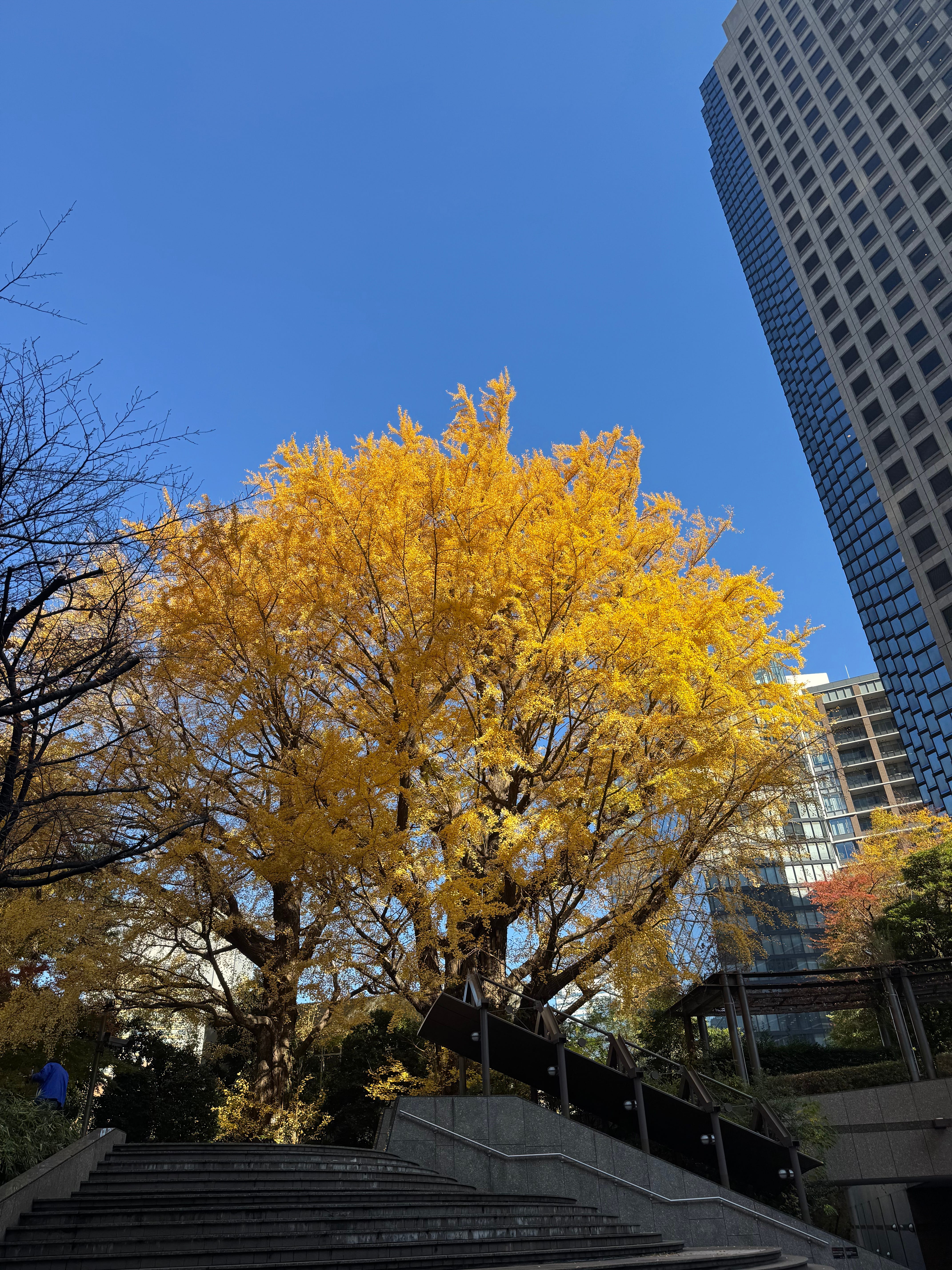
I see life as a series of grand adventures. Chapters perhaps, defined by the period you’re in, the people you meet, and the places that you stay. They can be small yet meaningful adventures like a trip to Japan and stumbling across a massive yellow Gingko tree in the middle of Tokyo, or longer chapters like the four years in college during which you accomplish a specific goal over a defined period of time.
I like the adventure I’m on now. I also liked my time at a16z and grew up there – had a late post-college bildungsroman if you will - but I think that particular adventure was nearing the close. For those of you who don’t know, when I started at a16z at 25, I was on the consumer team, and then spun out with the a16z games fund, and from there built the speedrun program into what it is today with some brilliant colleagues. It’s been a windy journey with lots of different twists and turns (more here). Now speedrun is an institution, but as the system grows priorities change. It gets a bit more regimented, a bit less experimental, a bit more B2B. And while I think these are all the right choices for the program as a whole and I’m very proud of the mission that the team continues to pursue, I wasn’t sure if that was the right fit for me anymore.
It may be that right now the novelty of this new quest excites me, and the sheer amount of learning about the biotech industry and nanoparticle engineering and peptide chemistry is so interesting. And perhaps I’ll tire of it after a few years. But I do think that there’s a couple core differences that I really appreciate about being a founder that I’ll elucidate now.
First is this feeling of flow with what I must do. Now that I’m the CEO, I have to dictate how I spend my time and what I want to prioritize. No one is telling me what to do. Though my investors and team members give me advice, it is up to me to decide how the company should allocate its time and resources. I think VC actually trains you for this well, because there is a lot of ambiguity in what will create a good deal that generates good returns. So you’re always figuring out how to best spend your time: go to that event, meet this founder, have this lunch, write this essay… but never sure exactly what the ROI of your time is because a great deal can come from anywhere.
Perhaps this is what founders mean when they say they have conviction. Conviction not just in the idea of what you’re doing, but in the path before you and how to walk it. Perhaps at 30, I have just enough experience to know that these are the right things to do, and to have the bravery, intuition, and energy to make what I think are the right calls, coupled with the wisdom to accept failure when the time comes. They might be small things like knowing how to manage a meeting to get the right information or how to craft the right investor narrative, or harder things like knowing who to hire and who to fire. It is like I can see the golden path and all I have to do is keep taking another step forward.
I have my former bosses and mentors to thank for this training. If I were to break down some of this flow, one piece is the ability to make decisions quickly and with conviction in the face of uncertain information, and to internalize the inherent risk involved. To emotionally and rationally feel the risk, to where you know you’re taking a bet and it could fail but to detach the inputs from the outputs. I also gained a lot of valuable and specific skills during my 20s that I’ll gloss over briefly, from strategic thinking to hiring evaluations to managing people well to marketing funnel optimizations, but the one I think is most useful is the willingness to run towards painful conversations and problems. I used to put these things off but I now think being a good CEO means taking care of all the shit that other people don’t want to do. So I must run towards the most painful because it is often the most critical.
Now don’t get me wrong, there is still a lot of grunt work with this job (thank god for Claude cowork), but it is grunt work that I know is in service of the company: follow up on emails, set up meetings, finish payroll, etc. Whereas the grunt work I did before felt more in service of the system or the corporation, like taking hundreds of back-to-back zoom meetings. Some of the grunt work is also pleasing to me, as my brain is just very naturally drawn towards scientific problems. Now I understand what Naval means when he speaks about work that feels like play, because I just enjoy reading scientific papers or studying peptide skincare routines and thinking about this stuff. Things I would do in my off hours happily.
The second part of this adventure that has been great is the people that I meet along the way in this quest. I think there’s a lot of wonderfully controlled chaos that has been generated out of this startup. I moved to SF to raise money, got that done and am now potentially getting an office in NYC for our scientists to do research there. NYC is where I grew up and where my family still is and it’ll be fun to be bicoastal for a bit, especially with the Knicks in Five and the World Cup going on. There’s an energy to the city that is infectious and I’m sure will make for a magical summer.
I met a friend at this founder community I joined in SF who told me about this biotech trip to China that I went to on a whim, since I needed to be in China anyways. I ended up with a lot of new friends and business connections and wonderful experiences: dancing on the Great Wall in the rain during a music festival, seeing the pandas in the oppressive heat of Chengdu only surviving by the grace of several fresh coconuts, watching the little hotel robots deliver the world of tasty delights to our doorstep, or playing this silly little bubble popping game on one of several plane rides across the country. Of course, I wouldn’t have gone if there weren’t a clear business use case of meeting a lot of Chinese CROs/CDMOs that could advance our research forward, but I am fortunate that this company has widened the aperture of my experiences.

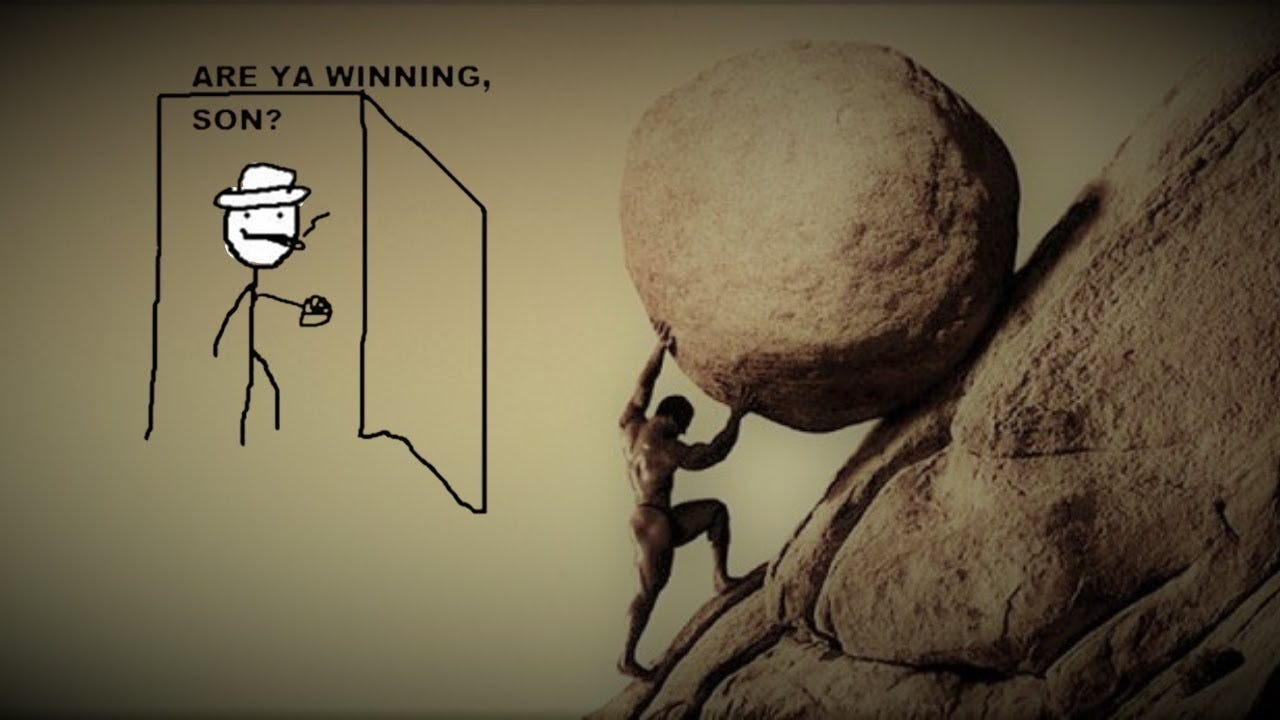
I was chatting with a new friend recently over drinks – who by chance I happened to run into at the SFO airport when our flights to NYC were both delayed, such is the village of SF – about the concept of the Sisyphean rock. Most people view the legend of Sisyphus in a purely negative light, condemned to forever do a task that he knows has no meaning, for the rock will never reach the top of the hill and he will forever push it upwards.
But what if he actually enjoyed pushing the rock? We lift heavy circular stones in the gym after all, and for what reason than to put them back on the rack when we are done. Maybe Sisyphus was simply a gym bro and enjoyed the exercise for the sake of exercise! Would that not cast his immortal task in a better light? So too do I enjoy pushing this boulder of a startup forward. All founders are doing the same motion. We have only one way to go but up, and we are certainly not sure if this rock will actually get to the top of the hill (the NASDAQ opening bell) or if it’ll come crashing down before we make it there. But either way, you better like pushing that fucking rock.
There is one final facet of the people I meet that I’ll comment on, which is that science people tend to be pretty damn passionate about science for its own sake. Even if it’s slow moving, even if they’re a bit more risk averse, it’s nice to work with people that deeply care about what they do and the patients they do it for. It’s easy to get caught up in the ARR and valuation game in Silicon Valley, and helpful to remember that the rest of the world doesn’t give a shit what your net dollar retention is. It’s also nice because while I met a lot of people in VC who were really amazing – such is the job, to meet and support amazing founders – the relationship with founders is by definition more transactional because we are bestowing money and status upon them if we invest. Now there’s a camaraderie that’s different than when I was an investor.
So anyways there’s definitely quite a bit of chaos in my life right now, but it is a texture that I like. The type of chaos that is constructive rather than destructive, and that is just part of the process of pushing this boulder up the hill.
The final part of this quest is having a clear and definite goal for the quest that keeps me centered. The two points before were speaking more about the path that I’m walking and the people that I meet along the way, this part is about having a clear reason to walk it in the first place, a raison d’être. I’ll speak more about what exactly we’re doing once we come out of stealth, but what I will say is that I’m working in the biotech / peptide / GLP-1 space. Now, there’s a few reasons I care about this besides for “market so big, number go up, VC happy” and all the unfair advantages our team and startup have.
Most people do not know this but I’m actually pre-diabetic, with an A1C of 6.0 despite working out consistently and eating generally well, though I still nurse a penchant for hunting out the best cocktails in NYC. I’ve been taking metformin for quite a while, and more recently GLP-1s to help control my blood sugar and hunger cravings. I also think that if GLP-1s do end up being this miracle drug that lowers cardiovascular risk, improves kidney and metabolic function, etc. then the mission of curing obesity and improving human health is an important one. Crazy that obesity is one of the leading causes of all cause mortality. After we have AGI and our lives get simpler, what will we have but our health, our communities, and our status games?
The broader goal I’m aiming for is to help contribute to the prevention of dementia / Alzheimer’s. Now I know that the EVOKE trials failed, but one of our core company goals is higher bioavailability in the CNS through our unique delivery mechanism. So if GLP-1s do have some metabolic impact on Alzheimer’s, then it is my life calling to push this product forward. I already have two grandparents who have dementia, and it is terribly sad to see not just what they’ve become, but also to see how it has affected the people around them. My other two grandparents have already passed away several years before (a very melancholic piece on it here), likely because of how tired they were trying to take care of their dementia-ridden spouse. I never want to forget these memories of my adventures or the golden leaves falling off the tree.
There’s an old parable of the bricklayer that I think about. There are three bricklayers who are laboring in the sun. The first says that he’s doing this job to support his family. The second says that he enjoys building and it’s part of who he is. And the third says that he’s crafting a cathedral to serve the Almighty. I think this is why founders talk in pseudo-religious terms and create cults of personality. When you have a rallying cry of getting humanity to Mars, it is a grand and noble vision that is much easier to rally people behind than “yet another AI agent productivity app.”
However, there is an interesting tension here, where the biblical proportions of the end goal may be balanced with how game-like building a company is. I’m absolutely sure that Musk treats SpaceX and Tesla like playing real life Factorio (a very in-depth, industrial engineering game). I’ve written about this before, but I see much of life through this game lens, and it’s important to play games that you enjoy and that you care about. Finding both is hard. I enjoy the stock market game and poker, but I don’t find it particularly meaningful outside of that enjoyment. On the flip side, I deeply believe in what we created at speedrun and supporting great founders on their journey, but the day to day monotony of applications was quite tough to bear.
So perhaps what I’ve realized is to find important games to play. Play silly games, win silly prizes. Most of us don’t have the self-awareness to even realize that we’re even playing a game at all; we’re just stuck in the simulation. Think about it: getting into college is a game of grades and extracurriculars, seeking a promotion at work is a game of output and getting people to like you, dating is full of reading and sending subtle social signals and clues. But generally, I like to play more serious games, ones with real outcomes with real stakes. Perhaps that’s why I was always drawn to these complex grand strategy games when I was younger like Civilization or Age of Empires. But, I always remember that it is still just a game at the end of the day. If we don’t make it to Mars, if I can’t answer that email Friday at 8PM, if we can’t get GLP-1s to penetrate the blood brain barrier effectively, life still marches on.
“Everything matters, but nothing is important.”
horrifying that you know about factorio haha. respect as always, excited to see more
An inspiring and simultaneously down to earth read! Thanks for sharing